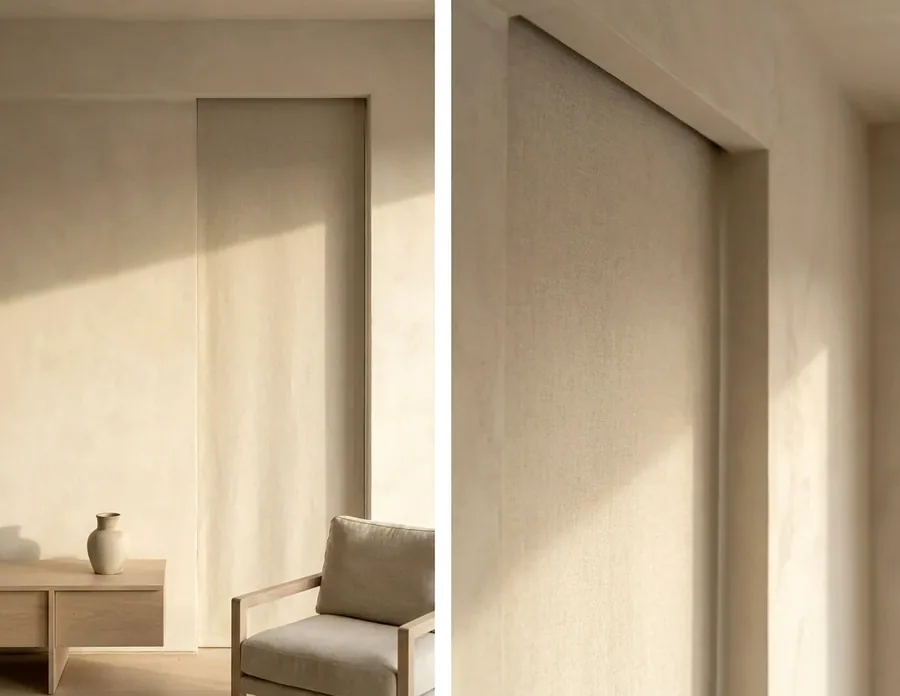
Built Into The Ceiling, Not Bolted On After
This is the system architect-designed and heavily renovated homes ask for — frameless glass, double-volume glazing, minimalist detailing, nothing visible when the blind is open. It suits Birdhaven particularly well: the suburb's compact stands have pushed a lot of renovations toward double-volume living rooms and floor-to-ceiling openings, exactly the kind of glazing a concealed system was built for. Plan it in at the design stage on a new build or major renovation and the result is completely clean; on an existing ceiling, a surface bulkhead or a slim cassette pelmet colour-matched to the ceiling gets you most of the same effect.
What Matters Technically
Recess depth depends on the blind type — a roller typically needs somewhere in the region of 110–150mm depending on tube and fabric drop, but we confirm the exact figure for your specific system at the quote stage rather than guessing on site. It's almost always motorised, since reaching a hand into a ceiling slot rather defeats the purpose. And because the recess sits right where downlights, aircon slots and curtain pelmets usually live too, coordinating with your builder or architect early makes the whole installation far cleaner.
Already Have The Recess?
We regularly walk into a recently renovated Birdhaven home and find a bulkhead already framed for a blind that was never fitted. If that sounds like your house, mention it when you enquire — we'll confirm exactly what system it was built for before we quote anything else.